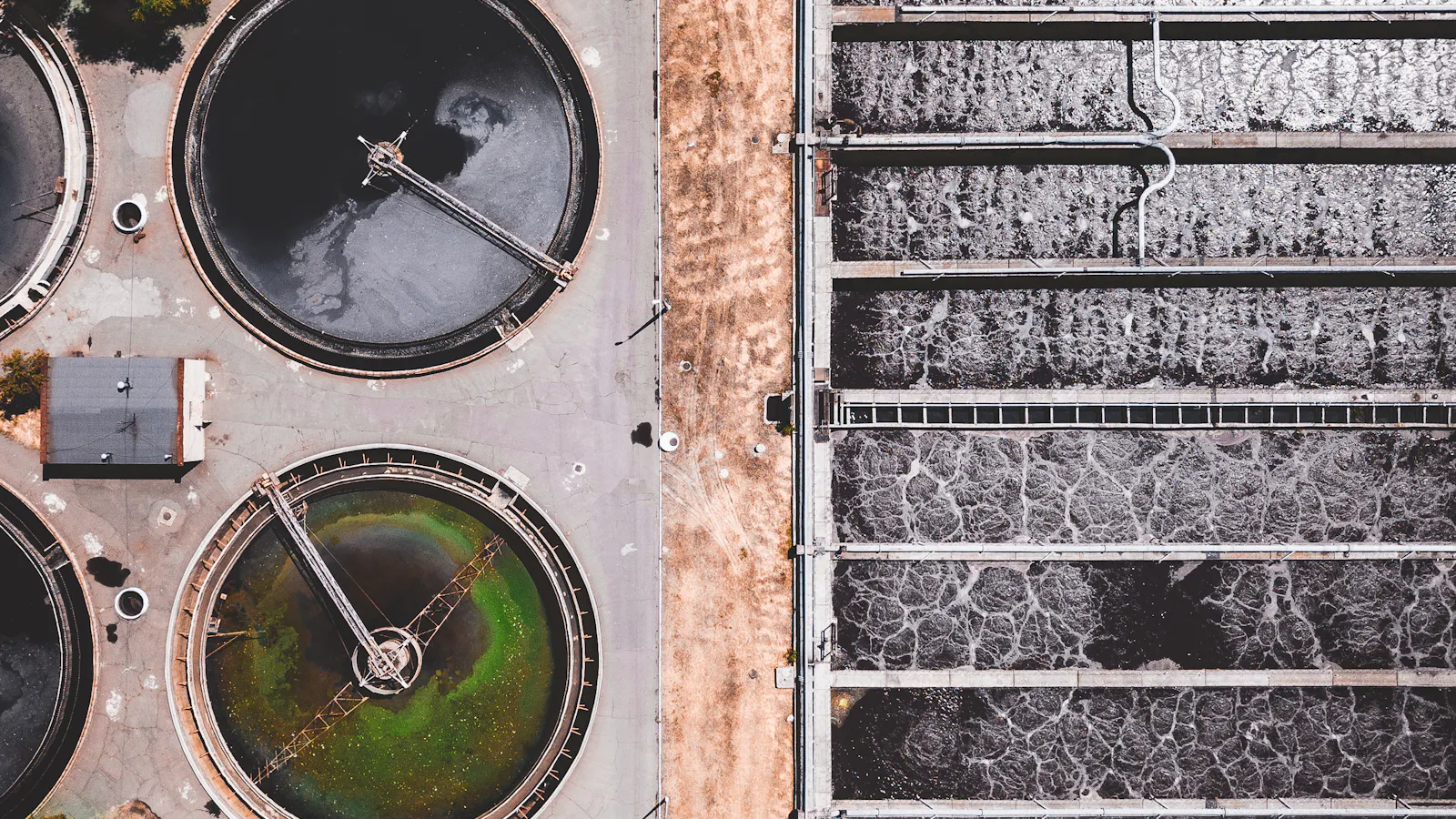
AI has moved from theory to the incident record in OT. In May 2026, Dragos published its analysis of an intrusion at a municipal water and drainage utility serving the Monterrey metropolitan area in Mexico. The attacker used commercial AI models at almost every step, and one of their goals was the utility's operational technology. They did not get in. But the case is the clearest public example so far of AI shortening the path from an IT compromise to an OT target.
What happened
The utility was one victim in a wider campaign against Mexican government organizations between December 2025 and February 2026, documented by Gambit Security. According to Dragos's analysis:
- The intrusion started in the enterprise IT network.
- One AI model handled planning and most of the technical work, including writing and refining tools. Another processed the collected data.
- During discovery, the AI flagged a server hosting an industrial gateway and a SCADA/IIoT management platform as a significant target, without the attacker bringing OT knowledge of their own.
- It researched the vendor's documentation, built credential lists and ran an automated password spray against the platform's login.
- The password spray failed. Dragos found no evidence that the OT environment was breached and no operational impact.
What AI changed
Speed. Tooling that would once have taken weeks was produced and improved in days, including a large post-compromise framework. The time between landing in IT and probing OT shrinks.
Visibility of OT to non-specialists. The AI recognised an OT asset and worked out how to attack its login. Attackers no longer need an ICS specialist on the team to notice that a gateway on the IT network matters.
Scale. The same effort can be pointed at many organizations at once, so smaller utilities and manufacturers that assumed they were "not interesting enough" are now in range.
What AI did not change
- The techniques were old. Discovery, credential guessing and custom scripts are well documented. Dragos assessed that the AI added speed and scale, not new ICS-specific capability, and it did not observe autonomous AI compromising infrastructure.
- Basic controls still worked. A password that resisted a spray stopped the attempt. That is the most important lesson in the whole case.
Five priorities for OT defenders
The SANS Five Critical Controls for ICS remain the right foundation. Applied to this threat:
- Remove default and shared passwords from every OT-facing interface. Gateways, SCADA and IIoT web consoles, historians and engineering portals reachable from IT are the first thing an AI-assisted attacker will try. Use unique credentials, lockout or rate limiting, and multi-factor authentication for remote and IT-to-OT access. See Identity & Access.
- Know exactly which IT-reachable systems touch OT. In this case the target was a gateway visible from the IT network. Keep an asset inventory that records which systems bridge the two worlds, and review it whenever the network changes.
- Shrink the IT-to-OT conduit. Route all traffic through an industrial DMZ, deny by default, and broker remote access through a controlled jump point. Document every allowed flow in your zones and conduits model.
- Detect inside OT, not only at the perimeter. Prevention alone is less reliable when attackers move faster. Alert on failed logins and password spraying against OT interfaces, and monitor east-west traffic inside control networks.
- Rehearse the IT-to-OT moment. Your incident response plan should say who decides to isolate OT from IT, how, and how fast. Practise it with operations before you need it.
Three numbers worth knowing
Ask these about your own environment:
| Question | Why it matters |
|---|---|
| How many systems reachable from IT can talk to OT? | Each one is a possible stepping stone. |
| What share of OT-facing logins use unique, non-default credentials? | This is what stopped the Monterrey attempt. |
| How long would it take to isolate OT from IT? | Attack timelines are shrinking; your response has to keep up. |
How OTVista helps
OTVista keeps the answers to those questions in one place. The Zones & Conduits module shows every path between IT and OT, the asset inventory records which systems sit on those paths, and findings link straight to remediation. Start with the free Quick Check to see where you stand, or have a practitioner run an OT cybersecurity assessment in the tool for you.
For how AI should be used safely inside OT, see AI in OT security: where it helps and where it needs guardrails and AI is moving into the control system.
Sources: Dragos, "AI in the Breach: How an Adversary Leveraged AI to Target a Water Utility's OT" (May 2026); Gambit Security research referenced by Dragos; SANS Institute, Five ICS Cybersecurity Critical Controls.
Topics: AI cyber attacks OT, AI-assisted ICS attack, water utility cyber attack, IT to OT lateral movement, OT security 2026, SANS five critical controls