OT cybersecurity for water and critical infrastructure
Water and wastewater utilities operate treatment plants and widely distributed pumping and storage sites, often with small technical teams. Practical, proportionate security matters more than complex tooling.
Sheet
Industry sheet
Sector
Water and critical infrastructure
Representative systems
5
Typical challenges
5
Example
Illustrative
Industry context
Covers:
Drinking water
Wastewater
District heating and cooling
Other essential services
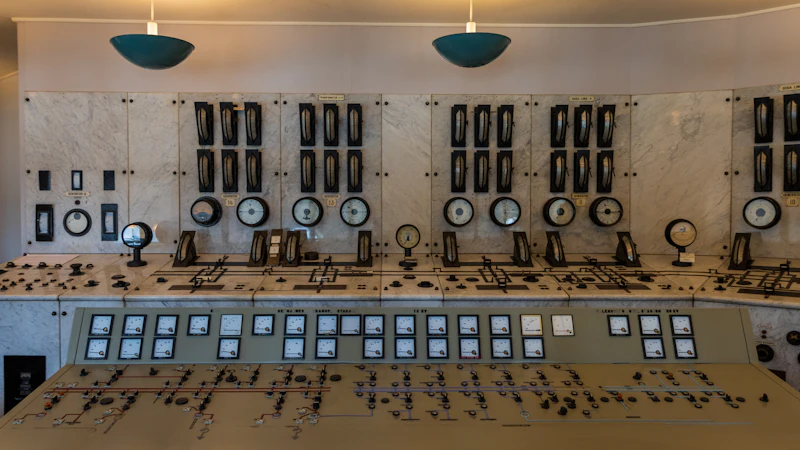
Utilities supervise treatment plants, reservoirs, pumping stations and network sites through SCADA and telemetry. Many outstations use cellular or radio links and are visited only occasionally.
Teams are often small, and integrators may have built and still support large parts of the system. Security improvements must be sustainable with the people available.
Reference architecture
Site E: Water utility
A control room supervising a treatment plant and remote pumping sites over telemetry. Select a zone to see its role, key risks and recommended controls.
Site EWater utilityA control room supervising a treatment plant and remote pumping sites over telemetry.
L4 · IT
Enterprise IT
Business IT: email, ERP and corporate users. Treated as untrusted from the OT point of view.
Key risks
Phishing and ransomware spreading towards OT
Direct IT-to-OT connections
Shared credentials with OT
Recommended controls
No direct traffic to OT: all flows terminate in the DMZ
Buffer zone where IT and OT exchange data. Nothing passes straight through; every flow terminates here. Integrator access and regulatory reporting pass through here.
Key risks
Broad firewall rules added for projects
Unpatched shared services
Remote access bypassing the jump host
Recommended controls
Deny-by-default rules with documented justification
A proportionate first assessment for a regional utility
Illustrative example
Situation
A regional water utility needs to show progress on OT security but has a small team and limited budget.
Result
The utility gets a realistic plan it can deliver, starting with the measures that most improve resilience.
Structured approach
Focus the assessment on a short list of high-value controls.
Review telemetry links and remote access first.
Confirm backups and manual operation procedures for key sites.
Produce a roadmap sized to the team's capacity.
This scenario is a hypothetical example of a common situation in the sector, not a description of OTVista client work.
Questions from water and critical infrastructure teams
Our team is small. Where should we focus first?
Typically on remote access, backups and recovery, basic segmentation and knowing which assets you have. These give the most resilience for the effort.
Are cellular-connected outstations a risk?
They can be if they are reachable from the internet or poorly authenticated. Private APNs, VPNs, restricted inbound access and monitoring reduce that exposure.
We would like to use Google Analytics cookies to understand how visitors use otvista.com, so we can improve it. Analytics only runs if you accept. No advertising cookies are used. Cookie notice